
Inside PR 2.59: Interns and Restructuring

[display_podcast]

One of our listeners, Yasin Akgun, asks,

As a final year marketing student about to embark on a summer internship I would be grateful if you could discuss what you guys think makes a good intern, examples of good students you’ve had and common mistakes that you’ve seen them make.

We thought this was a great question, and really well timed, as most of us are in the beginning of the summer intern season.

Because of that, we spend a few minutes talking about, from our perspectives, the qualities that make a great intern.

They include:

* Act as though you’re auditioning for a full-time job

* Take initiative and always go the extra mile

* Show that you have the ability to reach out and meet other people

* Show a  thirst for work

* Ask questions

* Learn how to negotiate

* Learn the gentle art of persuasion

* Really begin to understand where you best fit

* Have a “let me figure that out” attitude

* Be creative

* Find a project that you can see from beginning to end

And, while we’re talking about interns and their roles within the PR industry, we saw some interesting news about a global agency changing the titles of their staff and restructuring to fit the changing times.

GolinHarris is moving from generalists to specialists to adapt to the way consumer behavior is changing…and changing quickly.

The New York Times broke the story a day before the announcement and details what the agency is doing.

From the article:

The four specialties are strategists, who analyze a client’s business; creators, people like writers, designers and producers who generate ideas and tell brand stories; connectors, people who reach target audiences through traditional and social media as well as other channels; and catalysts, account leaders overseeing relationships with clients.

Martin Waxman makes a great point: It seems like they’re borrowing from Malcolm Gladwell’s “The Tipping Point.”

But, in this case, their creators are his mavens, their catalysts are his salespeople, and their connectors are, well, his connectors.

This really is a sign of the times, but Joe Thornley wonders if GolinHarris simply is responding to the smaller, more nimble agencies that are already well down the road of adding specialists to their teams.

What do you think? What qualities make for a great intern? And what are your thoughts on the GolinHarris restructuring?

Do you have an idea for a topic you would like us to discuss? Send us an email or an audio comment to [email protected], join the Inside PR Facebook group, leave us a comment here, message us @inside_pr on Twitter, or connect with Gini DietrichJoe Thornley, and Martin Waxman on Twitter.

Our theme music was created by Damon de SzegheoRoger Dey is our announcer.

This week’s episode was produced by Kristine Simpson.

Posted written by Gini Dietrich.
Inside PR 2.56: Key Learnings from Conference Season

[display_podcast]

The spring conference season has ended so we’re all back in our offices, podcasting from our desks, and talking about what we’ve learned the past couple of months.

Before we get to that, though, a HUGE congratulations to Shel Holtz and Neville Hobson. They just recorded their 600th episode. I did the math. If they recorded once a week, that would take 11 years to achieve. But they’ve cut that in half…six years; 600 episodes; twice weekly podcasts.

It’s no easy feat, either. They use Google Wave to begin brainstorming each session, adding commentary, links, and other information to enhance the story. They spend a lot of time bringing you relevant and valuable information. And that’s why it’s one of the most respected and highest listened to podcast in our industry.

If you’re not already subscribed, do it now by clicking here.

If you missed it, there was a really good comment from Keith Trivitt, associate director of public relations at PRSA, on the Burson-Marsteller/Facebook issue.

We talked for a couple of minutes about Keith’s response and the responsibility of all PR professionals, no matter their PRSA membership.

And on to the show!

A few things each of us learned throughout conference season:

  • The Toilet Paper Entrepreneur, Mike Michalowicz, talks about not calling yourself a PR firm, but to focus on what makes you special. That allows you to take yourself out of the rate discount discussion and get paid for your expertise.
  • Bret Werner talks about really understanding your niche, figure out which companies you really want to work with, and which clients you need to take to get you to those gold star companies in the next three to five years.
  • Jay Baer is a great speaker, who also knows how to speak in tweets, he said the goal is not to be good at social media, but to be good at business using social media.
  • Jay also said, if you suck, Twitter is not your problem.
  • Jen Prosek, author of Army of Entrepreneurs, has a great philosophy on training and onboarding new consultants.

One more thing: Barbara Nixon, we talk about the difference between Facebook groups and Facebook pages for you!

Do you have an idea for a topic you would like us to discuss? Send us an email or an audio comment to [email protected], join the Inside PR Facebook group, leave us a comment here, message us @inside_pr on Twitter, or connect with Gini DietrichJoe Thornley, and Martin Waxman on Twitter.

Our theme music was created by Damon de SzegheoRoger Dey is our announcer.

This week’s episode was produced by Kristine Simpson.

Inside PR 2.46 – Happy Birthday Twitter!

[display_podcast]

It’s no surprise, if you spend any time on Twitter, that they celebrated their fifth birthday on Monday.

Yes, on March 21, 2006, co-founder Jack Dorsey sent his first tweet. And, according to Martin Waxman, they are “officially a toddler. They can walk and talk and are past their terrible twos.” It seems incredible that it’s only been five years, but also amazing that it has been that long.

A few interesting statistics:

  • It took three years, two months, and one day for Twitter to reach one billion tweets. Then it took one week to reach another billion.
  • There were 465 tweets per second when Michael Jackson died last June, but the current record is 6,939 tweets per second.
  • A year ago, the average number of tweets sent in a day were 50 million. Yet last month there were 140 million tweets per day and 177 million just last week.

But, on their fifth birthday, they’re changing their terms of service because they have to make some money. And, in the process, they’ve turned away the developer community who helped them get as large as they are.

Alexandra Samuel said it best in her Harvard Business Review blog.

So as Twitter locks the door, some geeks somewhere are coming up with a new idea that will fill the void. This infinitely more flexible and risk-embracing startup will explode onto the social media scene with the next thing, or maybe even the Next Big Thing. And then sometime in 2015, it, too, will trade in creative chaos for business sense.

And, perhaps what Dave Winer, the father of podcasting and RSS feeds, has in mind with his new Minimal Blogging Tool that allows us to keep our content on our own servers. It allows us to push that content wherever we need to to reach our audiences, but we own it so it can’t be affected when the social networks change their terms of service.

Additionally you’ll hear in this week’s podcast:

  • Springtime in Gov 2.0 in that Canada is finally joining Australia, the U.K., and the States in the social and the open movement;
  • Third Tuesday this month is the best (and misses) of SXSW;
  • The “Dear CEO” eBook has been published and can be found at Spin Sucks;
  • The New York Times is charging for content; and
  • Martin talks about what he’ll receive as immediate past president of CPRS, come June.

We’d love to get your thoughts on Twitter’s birthday or any of the other topics we discuss this week.

Send us an email or an audio comment to [email protected], join the Inside PR Facebook group, leave us a comment here, message us @inside_pr on Twitter, or connect with Gini DietrichJoe Thornley, and Martin Waxman on Twitter.

Our theme music was created by Damon de SzegheoRoger Dey is our announcer.

This week’s episode was produced by Yasmine Kashefi.

Inside PR 2.42: The Ten Commandments of Positivity

[display_podcast]

David Jones (and so will you) will be very happy that Gini Dietrich got a new recorder. Now MUCH better sound for you!

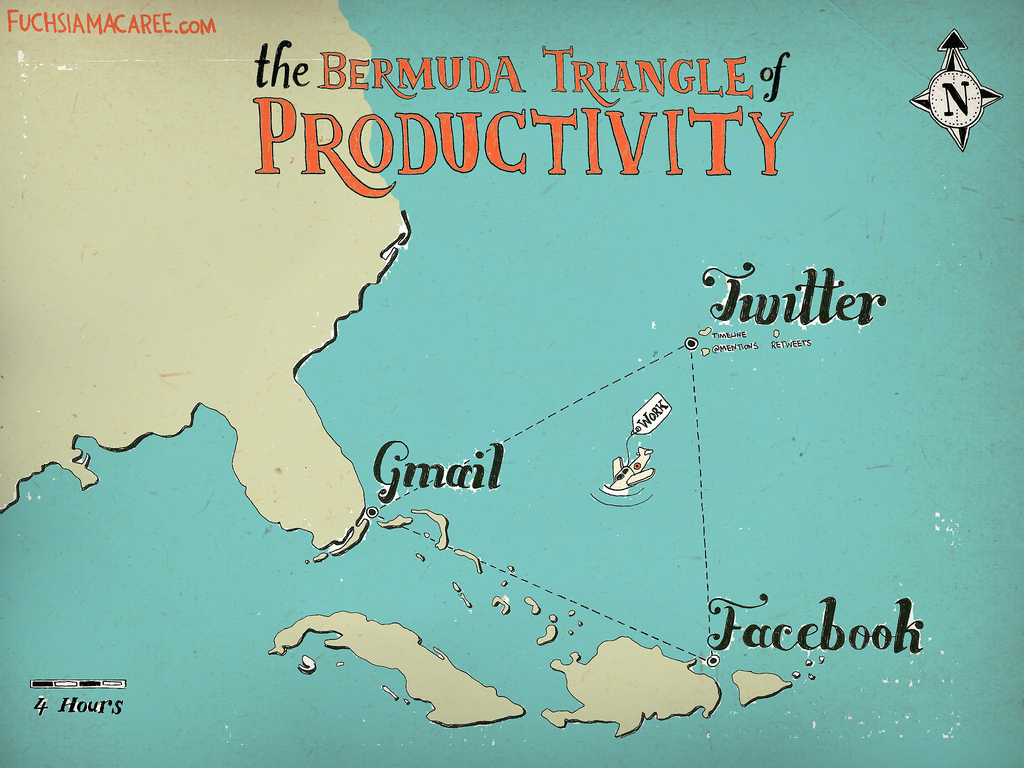
A few newsworthy things we discuss: The ban on UberTwitter (which has now been lifted) and this image of the social media Bermuda Triangle that Petya Georgieva sent to us.

This week, Martin Waxman talks about his 10 commandments for public relations, which Joe Thornley notes we tend to forget. These are eternal truths and include:

  1. Don’t lie
  2. Don’t spam
  3. Don’t overpromise
  4. Don’t pretend something is what it isn’t
  5. Be creative
  6. Remember yours isn’t the only story out there
  7. Know where you stand in the grand scheme of things
  8. Do what you say
  9. Smile
  10. Say thank you

These commandments are ethical-based and are a great reminder that spin sucks and bad PR is bad PR. Smiling goes a long way, which Gini discovered when a University of Michigan study was released showing bad moods are as contagious as the common cold.

It’s so easy to spread your bad mood around through email and the social web and we talk about how, as leaders, we need to be very cognizant of how we behave not only affects the people in front of us, but also morale and culture that can have a last effect. When is online conversation appropriate and when is it better to get out of your office and actually talk to people?

Don’t forget we’re recording live at PodCamp in Toronto THIS Saturday! We hope to see you there.

Do you have comments? Send us an email or an audio comment to [email protected], join the Inside PR Facebook group, leave us a comment here, or message us @inside_pr on Twitter. Or connect with Martin WaxmanJoe Thornley, and me on Twitter.

Our theme music was created by Damon de SzegheoRoger Dey is our announcer.

This week’s episode was produced by Yasmine Kashefi.

Inside PR 2.39 – LinkedIn Recommendations and Social Networks In Egypt

[display_podcast]

We’re trying something new starting this week. Rather than give you the time sections of the podcast, we’re taking a cue from NPR and writing an accompanying blog post with each podcast.

So here we are…on our 39th (can that be right??) episode of Inside PR. This week we answer a bunch of questions from our listeners and we touch on the crisis in Egypt.

Shel Holtz sends in an audio question (we love him!) and Guy Skipworth asks about former employees having online relationships with your clients after they leave your agency. You can listen to our discussion about both in the podcast.

Long-time listener Danny Starr says,

“Just catching up on old episodes and the discussion on “making” viral video was really good. One thing that I think needs to be pointed out about viral video is that you never know what’s going to hit it big… and while there are things you can do like capture something funny or unexpected in the footage, I think that anyone setting out to achieve the result of having a video go viral – and we need to be clear that viral is a result, not really a strategy – needs to be putting up many different things.”

The thing is, Danny, we agree with you. In fact, at Arment Dietrich, when we get a call about making a viral video, we always joke internally that we’ll create the video the client wants and then have two guys kicking each other in the nuts so it does go viral. Not really a strategy, but we’re certain it would work! And yes, I say “nuts” in the recording.

And, while we don’t spend much time talking about what’s going on in Egypt, we do ask (and answer) an important question, “Is Internet use a human right?

Hope you enjoy this week’s Inside PR!

And tell us…what do you think of the new format? Do you have other comments? Send us an email or an audio comment to [email protected], join the Inside PR Facebook group, leave us a comment here, or message us @inside_pr on Twitter. Or connect with Martin Waxman, Joe Thornley, and me on Twitter.

Our theme music was created by Damon de SzegheoRoger Dey is our announcer.

This week’s episode was produced by Yasmine Kashefi.